Attacking Midfielder Skills Every CAM Needs
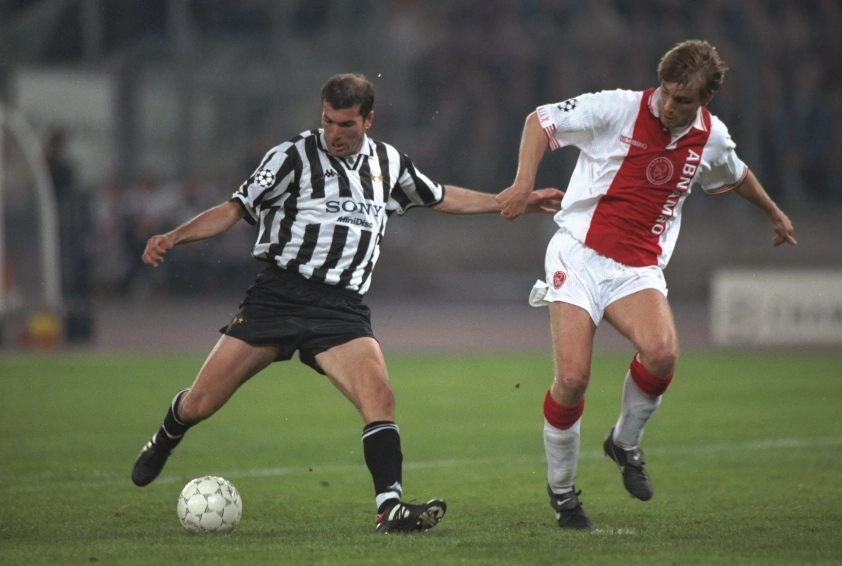
An attacking midfielder connects the midfield and the attack. The best players in this position use strong technical skills, smart movement, and quick decisions to get the ball in dangerous spots, link up with teammates, and create chances.
A good attacking midfielder does more than play pretty passes. They need sharp technique, strong awareness, clever movement, and the confidence to affect the game near the opposition box. For adult amateur players, the aim is not to copy professionals perfectly. It is to build simple habits that help you perform under pressure, make better decisions, and turn possession into chances.
What Does an Attacking Midfielder Do?
The attacking midfielder usually plays between the opposition midfield and defence. This is one of the hardest areas of the pitch because space is limited and pressure arrives quickly.
Their job is to help the team progress the ball into dangerous areas. That can mean receiving on the half-turn, combining with forwards, switching play, slipping a pass behind the defence, arriving late for a shot, or simply keeping the attack connected.
In many teams, the attacking midfielder is also the player who changes the tempo. Sometimes they speed the game up with a first-time pass. At other times, they protect the ball, draw pressure, and wait for a better option. The best players in this role know when to be creative and when to keep the game simple.
1. Technique
The best attacking midfielders are dangerous and hard to predict. This comes from having strong technique. Players like Diego Maradona, Zinedine Zidane, and Johan Cruyff had great technical skills that let them change games in a moment.
Technique isn’t about juggling the ball for hours or doing fancy tricks. Those skills can help, but they don’t make you a good player on their own. In a game, technique means being able to control the ball when it counts.
For an attacking midfielder, the most important technical skills are:
- Receiving the ball under pressure
- Taking the first touch away from danger
- Turning quickly between the lines
- Dribbling in tight spaces
- Passing accurately with both feet
- Protecting the ball when defenders close down
Having a good first touch is very important. If your first touch is poor, you lose the chance to turn, pass, or shoot. If your first touch is clean and into space, you can play forward before the defense reacts.
If you’re an adult amateur, the best way to improve your technique is to practice simple actions at game speed. Try receiving the ball from different angles, open your body before the ball comes, and aim to make your next pass in two touches or less.
The best technical attacking midfielders make tough things look easy. They handle pressure, stay balanced, protect the ball, and use their first touch to set up their next move.
2. Killer Pass
Defensive midfielders usually keep the ball with short, simple passes. Attacking midfielders need accurate passing and a wider range of passes because they play closer to the goal.
A killer pass isn’t just a long ball forward. It’s any pass that breaks through defenders or gives your team a clear attacking chance. It could be a disguised pass to the striker, a reverse pass to a winger, or a simple cut-back after getting into the box.
Good attacking midfielders know when a pass is on and when it isn’t. Trying to force the final ball every time often means losing possession. The best playmakers are patient enough to keep the ball but brave enough to play forward when the chance comes.
Useful passing options for an attacking midfielder include:
- Through balls behind the defensive line
- Wall passes around the edge of the box
- Diagonal passes into wide players
- Cut-backs from inside channels
- Disguised passes into the striker
- First-time passes when the defence is unbalanced
Timing is everything. If you play a forward pass too early, it might go straight to the goalkeeper. If you wait too long, defenders can recover. Attacking midfielders should look around before getting the ball so they know their next option.
At the adult amateur level, the best attacking midfielders are not the players who try the hardest pass every time. They are the players who know when to keep the ball, when to combine, and when to play the pass that changes the attack.
3. Football IQ
Football IQ is one of the most important skills for an attacking midfielder. This player is often the brain of the team, especially in possession. They need to understand the game, recognise pressure, and make quick decisions before the ball arrives.
A player with good football IQ does not need many touches to affect the game. They scan early, read the defenders’ body shape, and choose the right action for the situation. Sometimes that action is a risky pass. Sometimes it is a safe pass that keeps the attack alive.
For an attacking midfielder, football IQ includes:
- Scanning before receiving
- Knowing when to turn and when to bounce the ball back
- Recognising space between the lines
- Understanding when to slow the attack down
- Spotting runners before defenders react
- Moving away from pressure to create a passing lane
One common mistake at the amateur level is watching the ball for too long. If the attacking midfielder only looks at the ball, they receive without knowing what is behind them. That usually leads to rushed decisions.
A better habit is to scan before the pass is played. Look over the shoulder, check the nearest defender, identify the next passing option, and then receive. This small habit can make a big difference.
Kevin De Bruyne is a modern example of elite football IQ. His game shows how scanning, awareness, timing, and decision-making can turn normal possession into dangerous attacks.
4. Positioning Between the Lines
Positioning helps an attacking midfielder get the ball in dangerous spots. The job isn’t just about standing in the middle and waiting. Good attacking midfielders keep moving and adjusting to find space.
The most valuable space is often between the opposition midfield and defensive lines. From there, the player can turn, combine, shoot, or play the final pass. This is why attacking midfielders are often described as players who operate “between the lines”.
To find better positions, attacking midfielders should:
- Move behind opposition midfielders, not directly next to them
- Create passing angles for centre midfielders
- Check away before moving into space
- Receive side-on so they can see forward
- Avoid standing in the same vertical line as a defender
- Move again if the passing lane is blocked
Positioning also changes with the team’s formation. In a 4-2-3-1, the attacking midfielder usually stays central behind the striker. In a 4-3-3, they might play as an advanced number 8, coming from deeper positions. In a 4-4-2 diamond, they support two forwards and look for second balls.
The main idea stays the same: find spaces where you can get the ball and face forward. If you can’t receive, move to open up space for a teammate.
Professional players always adjust their body position, distance, and angle before getting the ball. Adult amateur players can do the same by checking over their shoulder, moving out of the defender’s shadow, and receiving the ball side-on when possible.
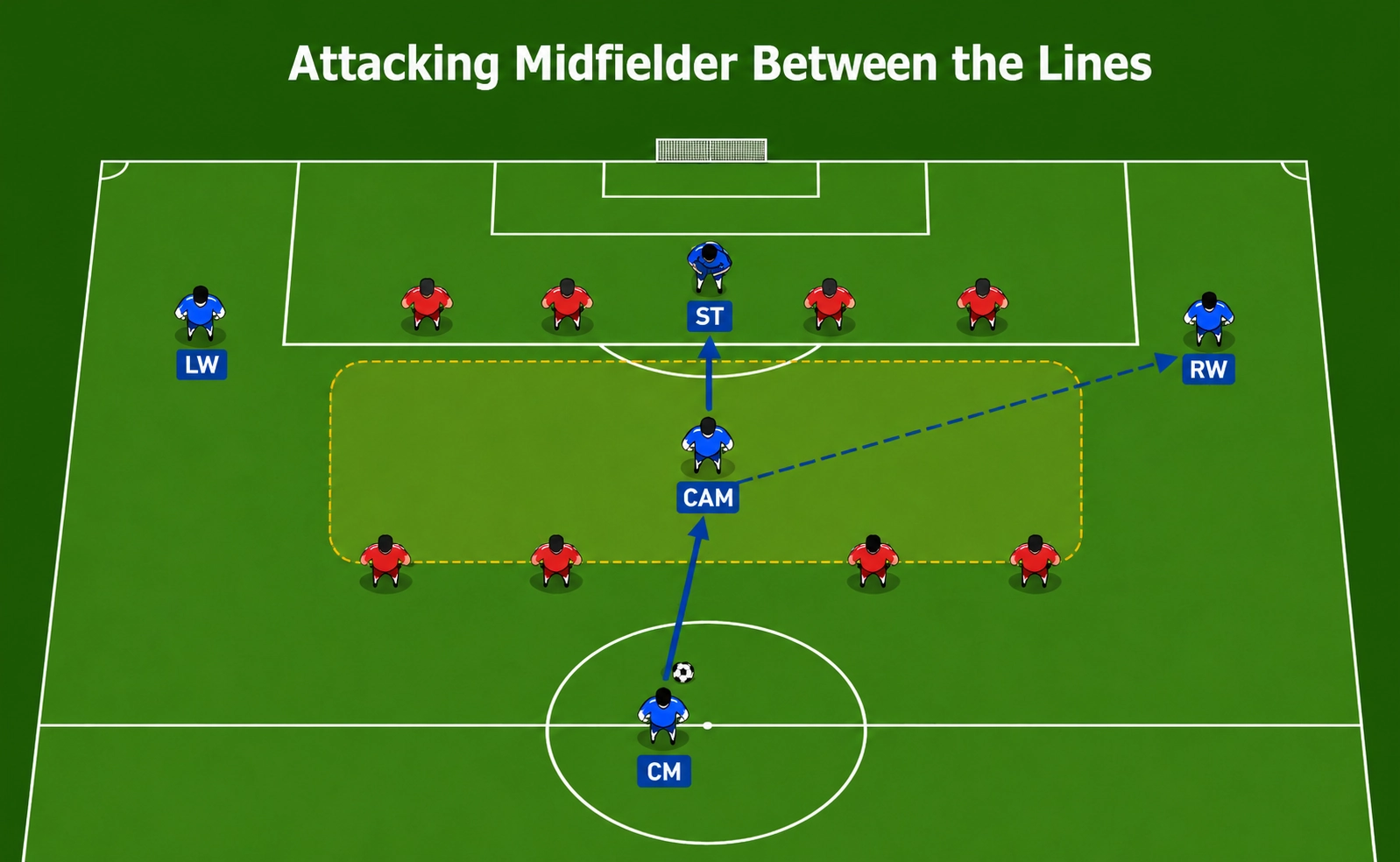
The attacking midfielder finds space between the lines, receives from the central midfielder, and has forward-passing options to the striker or a wide player.
5. Shooting and Goal Threat
Good attacking midfielders need to be a goal threat. If you only pass, defenders can sit back and block passing lanes. If you can also shoot, defenders have to step out, which opens up space for your teammates.
Attacking midfielders often shoot from the edge of the box, after cut-backs, from loose balls, or after late runs into the penalty area. They don’t have to score every week, but they need to make defenders respect their shot.
Important shooting situations for attacking midfielders include:
- Finishing from the edge of the box
- Shooting after a lay-off from the striker
- Arriving late onto cut-backs
- Striking loose balls after clearances
- Taking free kicks or penalties when appropriate
- Placing shots rather than always hitting with power
At the adult amateur level, decision-making matters as much as technique. Shooting from impossible angles wastes attacks. Passing when the shot is clearly on can also waste a good moment. A strong attacking midfielder learns to read the defender, the goalkeeper, and supporting runs before choosing.
Diego Maradona is one example of a midfielder who could create and score. He was the top scorer in Serie A in 1987-88 with 15 goals and was Napoli’s all-time leading goalscorer with 115 goals until Marek Hamsik broke the record in 2017.
For most amateur players, the aim is not to copy elite long-range goals. A better target is to arrive in good areas, keep shots low when possible, and choose moments when the goalkeeper is unsighted, or the defence is slow to close down.
How to Improve as an Attacking Midfielder
The best way to improve as an attacking midfielder is to train the role in realistic situations. Isolated technical practice helps, but the role depends heavily on timing, awareness, pressure, and decision-making.
Here are simple ways to make training more realistic:
- Practise receiving on the half-turn with a defender behind you
- Add a scanning rule before receiving the ball
- Use small-sided games where the CAM must play between lines
- Set up passing drills that finish with a through ball or shot
- Practise quick combinations around the edge of the box
- Add transition moments so the player must react after losing the ball
Coaches should also avoid judging the attacking midfielder only by goals and assists. A good CAM may create the pass before the assist, drag a defender out of position, or connect the team when the game becomes messy.
Players should focus on repeatable habits: scan early, receive side-on, protect the ball, play forward when possible, and move again after passing.
Key Takeaways
- Technique: Clean first touch creates time.
- Passing: Timing makes the final ball work.
- Football IQ: Scanning improves decisions.
- Positioning: Space between lines creates danger.
- Shooting: Goal threat pulls defenders out.
Related Posts
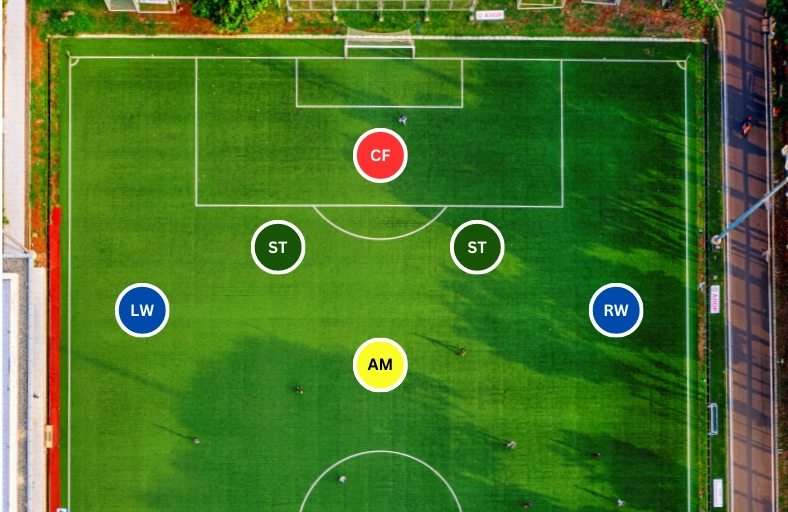
Striker or Winger: What's the Difference?
Many professional football players can play as a striker or winger. This article explains the differences between these two attacking positions.
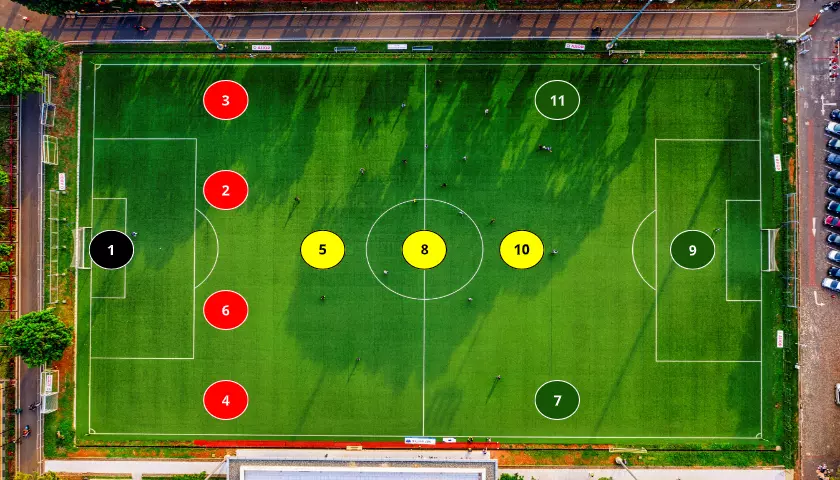
Football positions and numbers explained
This post describes the most common football positions and the jersey numbers usually associated with them.
5 attributes every football winger must have
The popularity of football wingers varies with the predominant tactics of the time. This post discusses the role and its key characteristics.